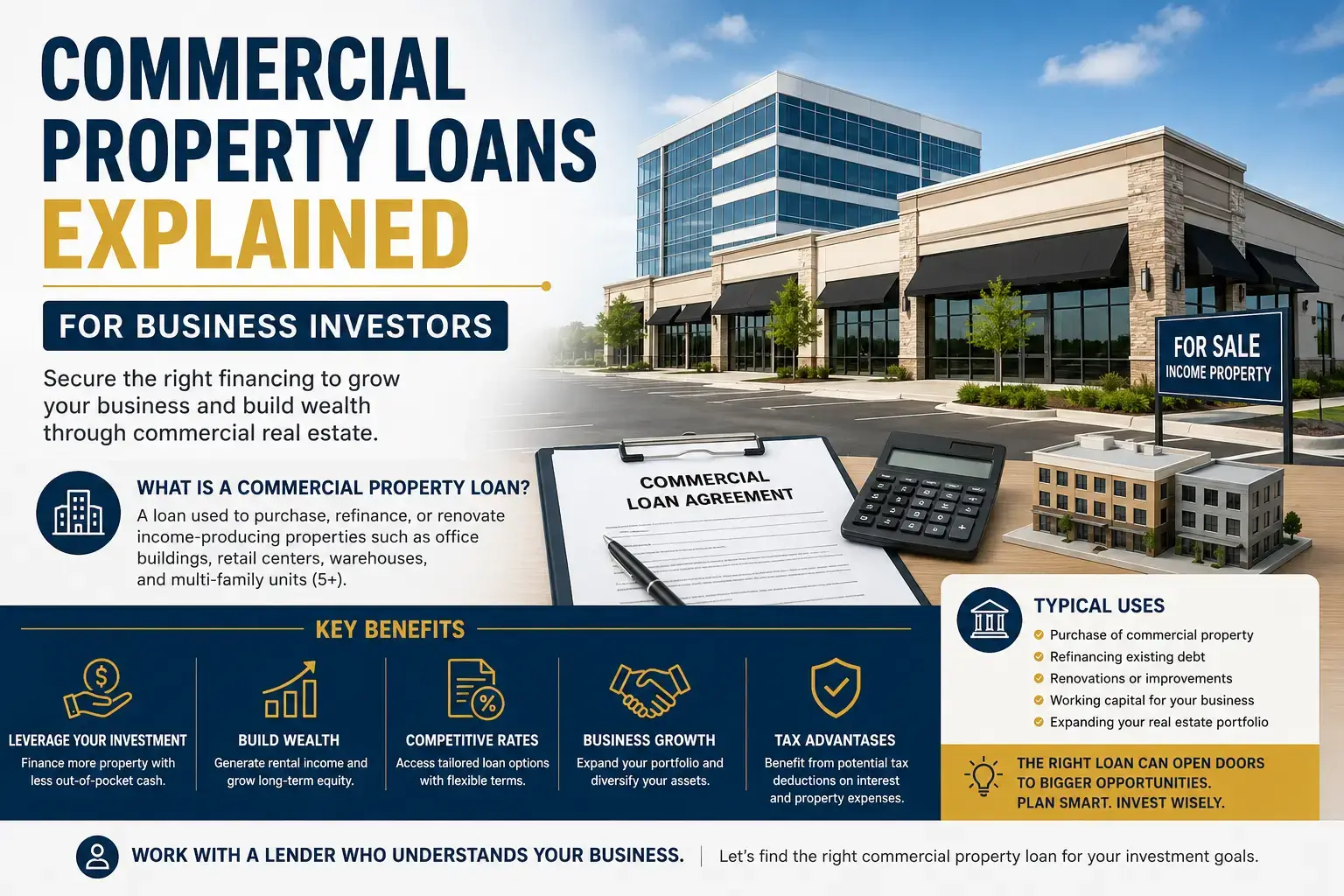
Commercial Property Loans Explained for Business Investors
Commercial Property Loans Explained for Business Investors
Commercial real estate remains one of the most powerful asset classes for investors seeking long-term wealth creation, passive income, portfolio diversification, and inflation protection. Whether purchasing an office building, retail center, apartment complex, industrial warehouse, medical facility, or mixed-use development, access to the right financing structure often determines the success of a commercial real estate investment.
Unlike residential mortgages, commercial property loans involve specialized underwriting standards, unique risk assessments, larger loan amounts, and property performance analysis. Understanding how commercial property financing works allows investors to secure better terms, improve cash flow, and scale portfolios more efficiently.
As global real estate markets evolve and lenders introduce more flexible financing programs, business investors now have access to numerous funding options including traditional commercial mortgages, SBA loans, bridge financing, multifamily loans, construction financing, portfolio lending, and private capital solutions.
This comprehensive guide explains commercial property loans in detail, including financing structures, qualification requirements, loan types, interest rates, risk considerations, and investment strategies that help investors build sustainable wealth through commercial real estate.
What Are Commercial Property Loans?
Commercial property loans are financing products designed to acquire, refinance, develop, or improve income-producing real estate used primarily for business or investment purposes.
Unlike residential mortgages that finance owner-occupied homes, commercial loans are generally used for:
- Office buildings
- Retail shopping centers
- Apartment complexes
- Industrial warehouses
- Manufacturing facilities
- Medical offices
- Hotels and hospitality assets
- Mixed-use developments
- Storage facilities
- Business headquarters
Commercial lenders focus heavily on property performance, tenant quality, occupancy levels, and cash flow generation when evaluating loan applications.
Why Investors Choose Commercial Real Estate
Commercial real estate offers several advantages compared to many traditional investments.
- Recurring rental income
- Long-term property appreciation
- Portfolio diversification
- Inflation protection
- Tax advantages
- Business expansion opportunities
- Scalable wealth creation
Many high-net-worth investors use commercial real estate financing strategically to acquire appreciating assets while preserving capital for additional investments.
How Commercial Loans Differ from Residential Mortgages
| Feature | Commercial Property Loan | Residential Mortgage |
|---|---|---|
| Property Purpose | Business or Investment | Personal Residence |
| Loan Amount | Typically Higher | Usually Lower |
| Underwriting Focus | Property Cash Flow | Borrower Income |
| Down Payment | 20%-35% | 3%-20% |
| Loan Structure | More Complex | Standardized |
| Risk Assessment | Income Producing Asset | Personal Occupancy |
Because commercial properties generate business income, lenders place greater emphasis on asset performance rather than solely relying on borrower income.
Understanding Loan-to-Value Ratio (LTV)
Loan-to-Value ratio measures the percentage of a property's value that lenders are willing to finance.
Commercial lenders generally offer:
- 65% to 80% LTV for stabilized assets
- 60% to 75% LTV for specialized properties
- 50% to 70% LTV for higher-risk projects
Lower LTV ratios often result in more favorable interest rates and easier approval processes.
Debt Service Coverage Ratio (DSCR)
One of the most important metrics in commercial lending is Debt Service Coverage Ratio (DSCR).
DSCR measures whether a property's net operating income can comfortably cover annual debt obligations.
Most lenders require a DSCR between 1.20 and 1.40.
| Example Metric | Amount |
|---|---|
| Net Operating Income | $180,000 |
| Annual Debt Payments | $120,000 |
| DSCR | 1.50 |
A stronger DSCR demonstrates lower risk and improves financing eligibility.
Types of Commercial Property Loans
1. Traditional Commercial Mortgages
Traditional commercial mortgages remain the most common financing option for income-producing properties.
These loans are offered by:
- Commercial banks
- Credit unions
- Regional lenders
- Institutional lending groups
Advantages
- Competitive interest rates
- Long repayment terms
- Predictable financing costs
- Suitable for stabilized properties
2. SBA 504 Loans
SBA 504 loans are government-supported financing programs designed primarily for owner-occupied commercial properties.
Benefits include:
- Lower down payments
- Long-term fixed rates
- Reduced capital requirements
- Business growth support
Many business owners use SBA financing to purchase office buildings, warehouses, and industrial facilities.
3. SBA 7(a) Loans
SBA 7(a) loans provide flexibility by allowing borrowers to finance commercial property alongside working capital, equipment, and operational expenses.
This financing structure is particularly attractive for growing businesses seeking comprehensive funding solutions.
4. Commercial Bridge Loans
Bridge loans provide temporary financing while investors secure long-term funding or complete property improvements.
Common uses include:
- Property acquisitions
- Value-add projects
- Renovation financing
- Quick-closing opportunities
- Transitional properties
Bridge financing allows investors to capitalize on opportunities that may not qualify for immediate permanent financing.
5. Multifamily Property Loans
Multifamily financing supports apartment complexes and large residential rental properties.
Advantages include:
- Multiple income streams
- Scalable cash flow
- Strong investor demand
- Portfolio growth opportunities
Many investors view multifamily assets as one of the most resilient sectors in commercial real estate.
6. Construction Loans
Construction loans finance ground-up development projects and major property expansions.
These loans often convert into permanent financing after project completion.
Typical uses include:
- New office developments
- Apartment construction
- Retail centers
- Industrial facilities
- Mixed-use projects
Commercial Property Loan Requirements
Commercial lenders evaluate several factors before approving financing.
Credit Quality
- Personal credit score
- Business credit history
- Payment records
- Existing liabilities
Financial Documentation
- Tax returns
- Profit and loss statements
- Balance sheets
- Bank statements
- Business financial reports
Property Analysis
- Occupancy levels
- Rental income
- Tenant quality
- Market demand
- Operating expenses
- Property condition
Commercial Property Loan Interest Rates
Commercial mortgage rates depend on numerous factors.
- Economic conditions
- Property type
- Borrower experience
- Loan size
- Market location
- Occupancy performance
- Loan term
| Loan Type | Typical Rate Range |
|---|---|
| Traditional Commercial Loan | 5.5% - 9.5% |
| SBA 504 Financing | 5% - 8% |
| SBA 7(a) | 6% - 10% |
| Bridge Loan | 8% - 14% |
| Private Lending | 9% - 16% |
Borrowers with strong financial profiles and high-performing properties typically qualify for more favorable rates.
Best Commercial Property Types for Investors
Industrial Real Estate
Industrial properties have experienced strong demand due to e-commerce growth and supply chain expansion.
Examples include:
- Distribution centers
- Logistics facilities
- Warehouses
- Manufacturing properties
Medical Office Buildings
Healthcare-related properties often provide stable tenant demand and long-term lease agreements.
Apartment Complexes
Multifamily properties remain attractive because they provide diversified income streams and strong occupancy trends.
Self-Storage Facilities
Self-storage investments often deliver attractive cash flow with relatively low operating complexity.
Mixed-Use Developments
Mixed-use properties combine residential, retail, and office components to diversify revenue sources.
Commercial Real Estate Investment Strategies
Buy-and-Hold Investing
Investors acquire income-producing properties for long-term appreciation and rental income.
Value-Add Investing
Properties are improved through renovations, leasing improvements, and operational optimization.
Development Investing
Developers create new assets to generate profits through sale or long-term ownership.
Portfolio Expansion
Investors leverage existing equity and financing relationships to acquire additional properties.
Commercial Loan Fees Investors Should Expect
- Origination fees
- Underwriting fees
- Appraisal fees
- Environmental assessments
- Legal expenses
- Title insurance
- Inspection costs
- Prepayment penalties
Understanding total financing costs is critical when comparing loan offers.
Refinancing Commercial Properties
Commercial refinancing allows investors to:
- Reduce interest costs
- Improve cash flow
- Access accumulated equity
- Fund expansions
- Consolidate obligations
Many experienced investors refinance strategically to improve portfolio performance and capital efficiency.
Risk Management in Commercial Financing
Commercial real estate investing involves both opportunity and risk.
Investors should focus on:
- Maintaining cash reserves
- Diversifying tenants
- Monitoring market conditions
- Managing leverage levels
- Reviewing financing regularly
- Analyzing vacancy exposure
Strong risk management practices contribute significantly to long-term investment success.
Tax Advantages of Commercial Real Estate
Commercial property ownership may provide several tax benefits.
- Mortgage interest deductions
- Depreciation allowances
- Cost segregation opportunities
- Business expense deductions
- 1031 exchange strategies
- Capital planning advantages
Professional tax planning can significantly improve after-tax investment returns.
Commercial Lending Trends for 2026 and Beyond
The commercial lending industry continues evolving through technology and innovation.
Key trends include:
- AI-powered underwriting
- Digital loan approvals
- Alternative credit evaluation models
- Investor-focused financing programs
- Sustainable property incentives
- Institutional capital expansion
- Data-driven risk assessment
These innovations are creating greater financing accessibility and efficiency for investors.
Choosing the Right Commercial Property Loan
| Investor Goal | Recommended Loan Type |
|---|---|
| Office Acquisition | Traditional Commercial Mortgage |
| Owner-Occupied Property | SBA 504 Loan |
| Business Expansion | SBA 7(a) |
| Quick Acquisition | Bridge Financing |
| Apartment Investing | Multifamily Financing |
| New Development | Construction Loan |
Conclusion
Commercial property loans serve as the foundation for many successful real estate investment strategies. Whether acquiring office buildings, multifamily properties, industrial facilities, retail centers, or mixed-use developments, the right financing structure can dramatically influence investment performance and long-term wealth creation.
By understanding commercial loan types, qualification requirements, interest rate structures, risk considerations, and financing strategies, investors can make informed decisions that maximize cash flow and support sustainable portfolio growth.
As commercial real estate markets continue evolving, investors who master financing fundamentals will be better positioned to capitalize on opportunities, secure competitive loan terms, and build substantial wealth through income-producing commercial assets.